
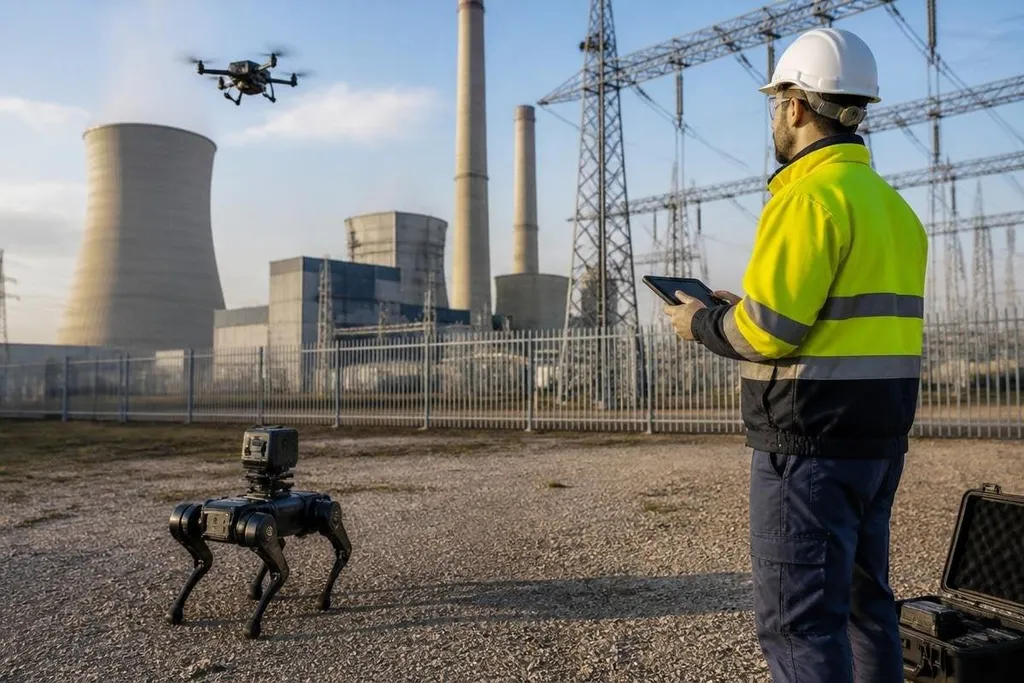
Energy robots are taking on work that puts people near height, heat, radiation, live equipment, or unstable ground. Their value comes from doing repeatable checks and sending back useful data while technicians stay at a safer distance.
- Robots inspect places that are hard or unsafe for people to reach.
- Sensors turn visual checks into records that teams can compare over time.
- Human technicians still make the repair decision.
Where energy robots fit
Power companies use several robot types because no single design can handle a turbine hall, a transmission line, and a flooded tunnel. A drone can inspect high structures from the air, while a tracked robot can move across rough floors inside a plant.
A robotic arm serves a different purpose. It can hold a camera, sensor, or tool in a fixed position while a technician controls the movement from a safer location. This setup is called teleoperation: a person guides the robot through a remote control system.
The work usually starts with inspection. Cameras can record cracks, loose parts, corrosion, leaks, or damaged insulation. Thermal cameras can show heat differences that a normal camera cannot see. LiDAR measures distance with laser pulses, helping the robot build a map of nearby equipment.
That data matters because an inspection is useful only when a team can act on it. A clear image of a damaged cable can support a repair plan. A heat reading can tell technicians where to look next, but it doesn't replace a full electrical check.
What changes for power workers
The main change is where people spend their time. A technician may review images, check sensor readings, and plan a shutdown before entering the work area. The robot handles the first pass and returns when the team needs another look.
This also creates a record. A plant can compare current images with older ones and see whether a crack, leak, or patch has changed. That comparison works best when the robot follows the same route and holds its sensors at a similar distance each time.
A repeatable inspection route also tells an energy team whether the robot can work without constant steering. Reports about energy robots at Robot24 can tie that claim to the route, sensor setup, and test date. The next question is whether the robot can follow that route safely when a gate is closed or a sensor loses its reading.
Autonomous systems can move through a planned route without a person steering every metre. They still need a defined area, a map, safe stopping rules, and a way to report blocked paths or poor sensor data. A robot that stops safely has done its job better than one that keeps moving with a bad reading.
Where the limits remain
Energy sites are difficult places for machines. Metal surfaces can confuse sensors, dust can cover cameras, water can damage electronics, and narrow passages can block a larger robot. Radio signals may also weaken behind thick walls or around heavy equipment.
The robot's report needs a human check. A camera may spot a dark mark, but the mark could be oil, shadow, rust, or a harmless stain. Software can sort images and flag changes, yet the final call still depends on equipment knowledge and site rules.
Maintenance is another part of the cost. Batteries need charging, sensors need cleaning, and moving parts need checks. A robot that sits unused after a short trial doesn't help a power team, no matter how capable it looked in a demonstration.
I'd choose an energy robot for repeat inspections before I chose one for repair work. Inspection gives the machine a clear task and leaves judgment with the technician; repair adds force, tools, safety checks, and a much smaller margin for error.
A buying checklist for energy teams
Use this list before a pilot moves past the planning stage:
- Name the task: Define the exact inspection, route, sensor, and report the team needs.
- Check the site: Test stairs, doors, water, dust, lighting, radio coverage, and nearby hazards.
- Set the handoff: Decide who reviews the data and who can stop the robot.
- Measure the result: Record inspection time, repeat visits, missed areas, and false alerts.
- Plan upkeep: Budget for batteries, cleaning, software support, spare parts, and operator training.
A useful pilot ends with a work decision, not a video.
If the robot finds problems sooner, cuts time near hazards, and gives technicians records they can trust, the power company has a reason to keep using it. The next question is whether that result holds after the trial team, route, and equipment all change.